ART
Accelerated Resolution Therapy
“Keep the Knowledge. Lose the Pain.”
“The most difficult aspect of discussing ART is the fact that it sounds too good to be true.”
– Laney Rosenzweig MS, LMFT
Creator of ART
Accelerated Resolution Therapy (ART)
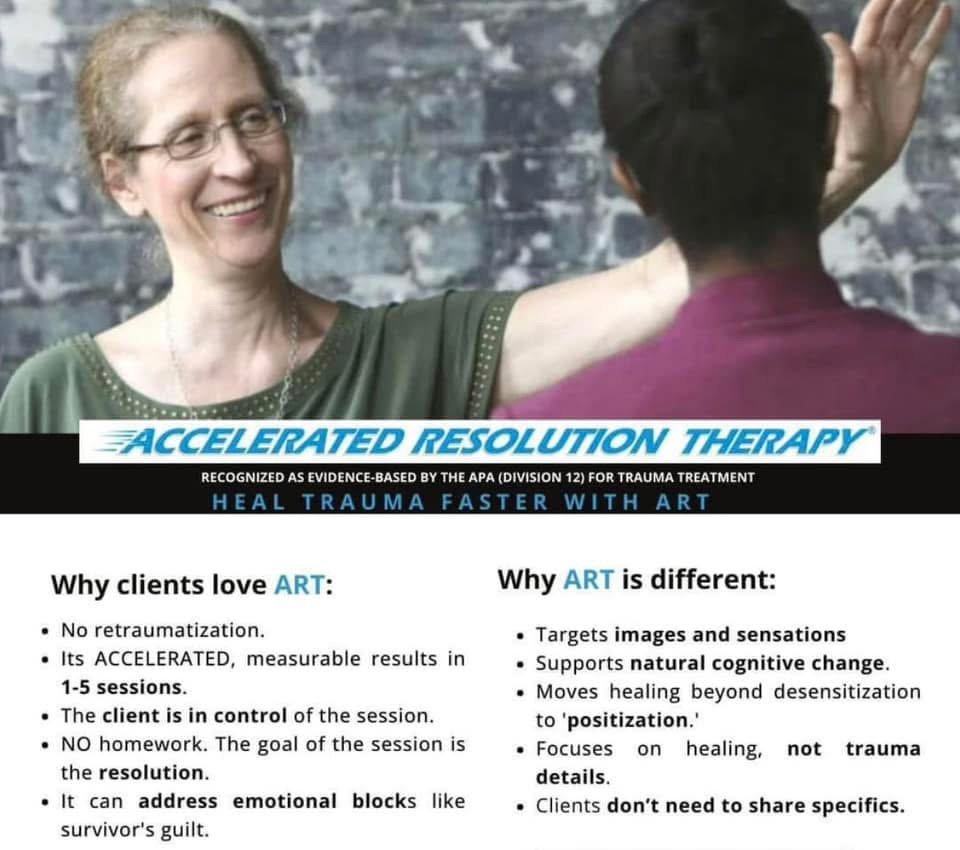
Accelerated Resolution Therapy (ART) is a structured psychotherapy approach that helps people move beyond the emotional and physical distress associated with traumatic or difficult life experiences. ART incorporates elements of established evidence-based therapies while using guided eye movements and a technique known as Voluntary Memory/Image Replacement (VMR/VIR) to help clients experience distressing memories in a new way.
One of the unique aspects of ART is that you remain in control throughout the entire session. Your therapist provides guidance, but you decide what you are comfortable addressing and how you want to move through the process.
A Different Way of Processing Difficult Memories
Traumatic experiences—such as abuse, combat, accidents, the loss of a loved one, or other deeply distressing events—can continue to affect us long after the event itself has ended. Memories may bring up intense emotions, unwanted images, anxiety, or physical reactions.
ART is designed to help you process these experiences without requiring you to share every detail of what happened. You do not have to tell your therapist the entire story of your trauma in order to participate in ART. Instead, you can focus on the images, emotions, or sensations that you are ready to work through.
During an ART session, your therapist guides you through a series of relaxing eye movements while you focus on aspects of the experience. When appropriate, VMR/VIR may be used to help you intentionally replace distressing images with more positive or preferred images.
The goal is not to deny or change what actually happened. The memory of the event remains, while the distressing emotional response associated with the memory can change. Many people describe experiencing their memories differently afterward—as though they have become more distant or less emotionally charged.
Moving Forward
ART focuses on helping you move from feeling stuck in a painful experience toward greater emotional freedom and a renewed sense of well-being. For some people, changes can occur relatively quickly, sometimes within only a few sessions.
ART draws from established psychotherapy principles and has been studied for a variety of concerns, including trauma-related symptoms, anxiety, depression, grief, and other distressing life experiences.
You are always in control of the process. Your therapist is there to guide and support you as you work toward feeling more at peace with your past and more present in your life today.
Ready to explore whether ART may be right for you? Contact us to learn more or schedule a consultation.
American Medicine Today: ep140 - Accelerated Resolution Therapy in Tampa
Creator Laney speaking on ART
The ART of Rapid Recovery | Laney Rosenzweig | TEDxSpringfield


What can ART help me with ?
Trauma
Phobias
Anxiety
Depression
Grief
Obsessive or Intrusive Thoughts
Insomnia
Codependency
Addiction Issues
Relationship Issues/Infidelity
And more…
Accelerated Resolution Therapy (ART) at Creative Healing

What Should You Do After an ART Therapy Session?
After an Accelerated Resolution Therapy (ART) session, it’s helpful to give yourself time and space to relax, reflect, and integrate the experience. While ART can help you process distressing memories and develop new perspectives, you may continue noticing thoughts, emotions, or insights after your session.
Helpful Ways to Support Yourself After ART
🌿 Relax and Rest
Give yourself permission to slow down. Enjoy calming activities such as reading, spending time in nature, taking a warm bath, or simply getting some extra rest.
🚶 Gentle Movement
A leisurely walk, stretching, or gentle yoga can help you reconnect with your body and remain present after your session.
🎨 Get Creative
Art, music, writing, or other forms of creative expression can provide a meaningful way to explore thoughts and emotions that may arise after your session.
📝 Journal
Consider writing down any thoughts, feelings, memories, or insights that come up. Journaling can help you reflect on your experience and notice changes in how you think or feel.
🧘 Practice Mindfulness
Take a few quiet moments to focus on your breathing, notice your surroundings, or practice meditation. Mindfulness can help you stay grounded and connected to the present moment.
Give Yourself Time
Everyone responds to ART differently. You may feel lighter, calmer, or more hopeful after a session, while other emotions or insights may continue to emerge over time. Be gentle with yourself and allow the process to unfold at its own pace.
Your ART session is a step toward healing. Give yourself the time, space, and care you need afterward.
Accelerated Resolution Therapy (ART) vs. EMDR
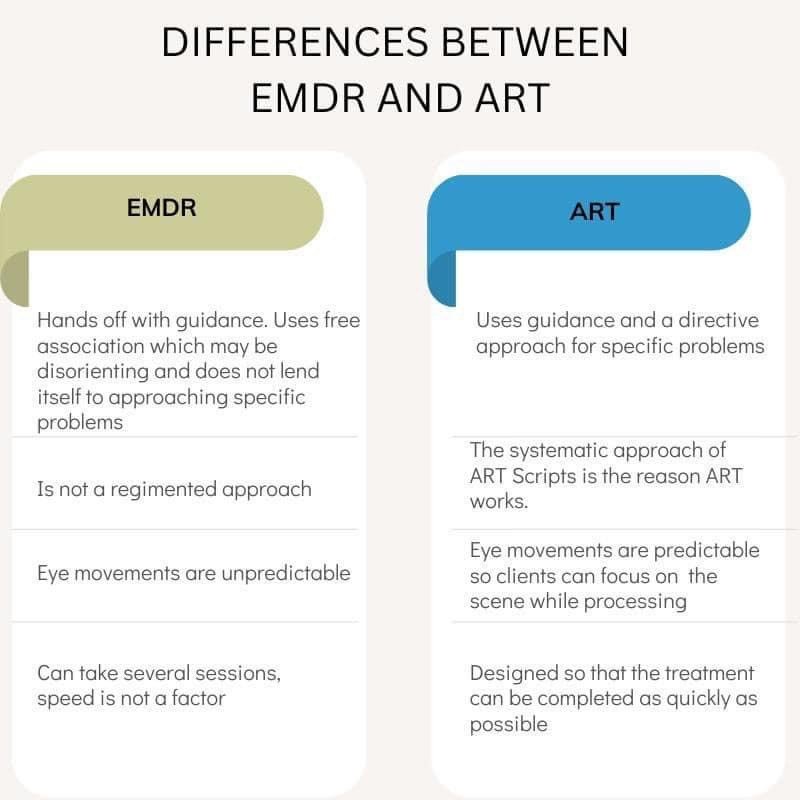
Accelerated Resolution Therapy (ART) and Eye Movement Desensitization and Reprocessing (EMDR) are both therapeutic approaches designed to help people process trauma, distressing memories, and difficult life experiences.
Like EMDR, ART incorporates guided eye movements to support the processing of distressing memories. However, ART uses a more directive approach that incorporates visualization and Voluntary Memory/Image Replacement (VMR/VIR) to help clients shift distressing images and develop more positive or preferred ones.
One of the distinguishing features of ART is its focus on rapid resolution. Many clients report meaningful relief in as little as one session, typically lasting 60–90 minutes, although the number of sessions needed varies from person to person.
Another unique aspect of ART is that you do not have to repeatedly describe or verbally recount your traumatic experience. You remain in control of what you share while your therapist guides you through the process.
ART can be used to address past trauma as well as current challenges, helping you move toward greater emotional well-being and a renewed sense of control.
ART INTENSIVE
If you're juggling a busy schedule but still seeking meaningful change, an ART Intensive might be just what you need. This focused, accelerated approach is designed for those who want to go deep into therapy and experience quick results without the traditional weekly sessions.
In our ART Intensive, we’ll work together in extended, targeted sessions to help you identify what truly matters to you and the changes you’re looking for. Through ART, you’ll be able to eliminate difficult thoughts and feelings instead of being controlled by them. You’ll leave with practical tools that fit into your daily life, helping you move toward your goals and values with more clarity and purpose.
An ART Intensive can provide a concentrated boost to get you moving in the right direction—all while fitting into your busy lifestyle.
ART Testimonials
Testimonial #1
“My experience with Accelerated Resolution Therapy (ART) with Kristen Moore was beyond anything I could have imagined. I had carried a traumatic experience from my youth for decades—one of the deepest and most painful memories that I had buried and avoided at all costs. The emotional weight of it had driven years of impulsivity, depression, and other irrational behaviors. I never talked about it. I couldn’t even think about it without spiraling.
Initially, revisiting that trauma in session was almost overwhelming, but Kristen’s guidance, combined with the calming structure of ART, made it not only manageable but transformational. As we moved through the process—changing the internal narrative, using visualization techniques, and reprocessing the experience—I felt the anxiety and emotional flooding sharply decline. What stood out as truly groundbreaking was the implantation of alternate, calming scenes that now automatically replace the old ones when I try to recall the trauma.
Weeks later, I’m still in awe. When I try to recall the original memory, my mind now redirects to the new, safe imagery we created. This trauma used to destroy my day, damage my relationships, and take me to the edge emotionally. Today, I can think about it without pain—and even, paradoxically, with a strange sense of peace. No medication required.
I’m a recovering addict (13 years clean) and in my 5th year as a first responder. I recommend ART to anyone, but especially to my fellow first responders, and those in the military or struggling with intense trauma-related mental health challenges. The potential of this therapy is incredible, and I genuinely hope it reaches those who need it most.”
-JN
Testimonial #2
“ I have been a client of Kristen’s for a few years. She recommended that I try an ART session to see if it provided any relief. I often get triggered back into PTSD flashbacks and it makes me feel like i’m experiencing the event over and over again. I was nervous to start the session but Kristen was helpful and made me feel comfortable and safe! After one ART session, I almost never think about the memory that used to keep me awake at night. I can think about the memory comfortably now without being triggered. I look forward to more ART sessions with Kristen!! ”
-JG
Testimonial #3
"I can't thank Kristen enough for guiding me through my healing journey with Accelerated Resolution Therapy (ART) after the traumatic dog attack I experienced. Her compassionate approach and expertise in this modality helped me process my fears and anxieties surrounding dogs and the sound of barking. Thanks to our sessions, I now feel empowered to visit the dog park and take my own dog for walks without any overwhelming triggers. It’s amazing to reclaim that joy and confidence—I highly recommend Kristen and this transformative therapy!"
-LB
Testimonial #4
”All my life I’ve suffered from OCD and PTSD, and it’s been challenging trying to find ways to cope with the things that trigger me. Most coping mechanisms don’t tend to help because of how my mind ruminates over things; but after doing Accelerated Resolution Therapy with Kristen I’ve found that my triggers have gone from causing anxiety attacks to just becoming another part of my day. It’s been so nice to have the ability to enjoy my day without fear that a trigger will shut me down. I cannot recommend Kristen and ART enough, they’ve both genuinely changed my life for the better.”
-AS